
Caring for a pet or a plant — Learning empathy and responsibility

1. Caring as a way to learn empathy
Caring for another living thing helps a child step outside their own point of view: they learn to notice the needs of others, to be consistent and to understand that their actions have consequences.
You don't need a dog or a cat. A plant on the windowsill, a small balcony garden or a bird feeder are just as valuable.
2. Colitas: the tenderness that protects
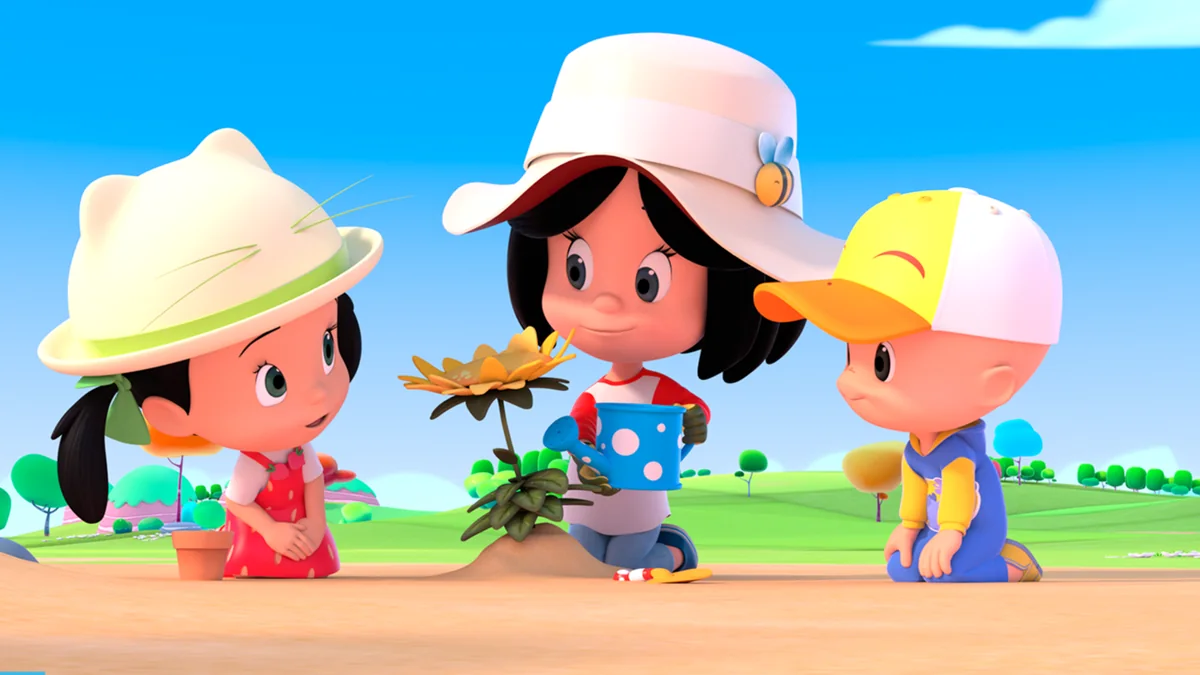
Colitas is the devoted champion of animals, plants and the environment. Her catchphrase, "We have to take care of it!", sums up an attitude parents can bring into everyday life:
- Observe before acting: Is the plant thirsty? Is the dog tired?
- Responsibilities that fit their age: watering, filling the water bowl or picking up dry leaves, always with an adult's supervision.
- Respect animals: don't bother them while they're eating or sleeping, and treat them gently.
3. Activities to do as a family
- Seed in a cup: plant a bean in a cup with damp cotton and draw how it grows each day (see Article 6).
- The caretaker's diary: a weekly picture chart for checking off care tasks.
- Nature-spotting walk: look for insects, birds and leaves in the park without touching them or taking them home.
- Before adopting a pet: talk as a family about what it involves, and remember that the final responsibility always lies with the adult.
More guides

Conflict-free morning routines
Cleo & Cuquin teaches the value of getting organized through Maripi, the sister who likes things to follow a…
Settling in at daycare and school
Cleo & Cuquin gives families two role models for settling in: the experience of Cleo, the big sister who can…
Sleep routines in early childhood
It works as a behavioral trigger and a predictable sound routine. Repeated every day at the end of the…