
Mindful screen time — Moving from on-screen entertainment to active play at home
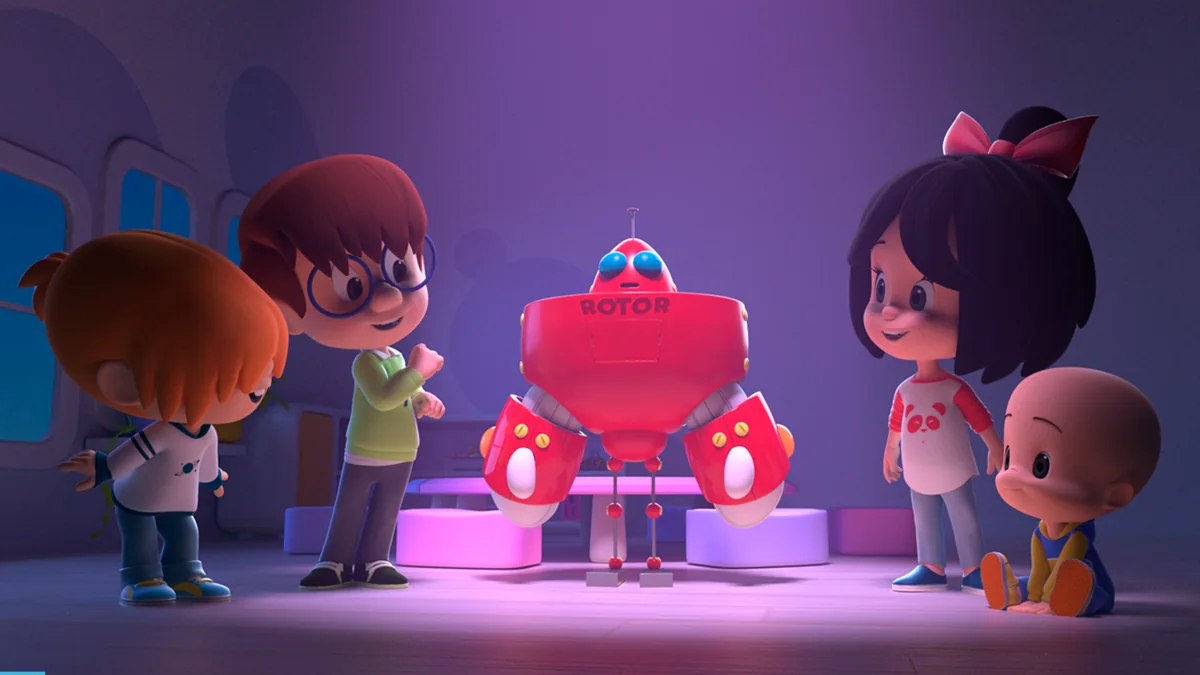
1. The "Screen as a Trigger" concept (Screen-to-Play)
The debate about children's device use shouldn't focus only on screen time, but on the quality of the content and on what happens after the screen is turned off.
A "mindful screen" is one that doesn't try to numb a child's attention with hypnotic, fast-paced stimuli, but instead acts as a learning trigger that inspires activities, building projects and games in the real world.
2. From passive watching to action in the living room
The storytelling in Cleo & Cuquin is designed to extend the learning beyond the episode through the bridge Screen ➔ Home:
| What they see in the episode | The real-world activity (Active play) |
|---|---|
| Cleo plays at being a gardener | Plant a bean seed in a cup with damp cotton and watch it grow. |
| The siblings build a boat | Reuse cardboard boxes from around the house to build a vehicle and make up a story. |
| Cuquin learns to put away his toys | Sing the clean-up song while the whole family tidies the room as a team. |
| Pelusin makes a giant drawing | Roll out a long sheet of paper on the floor to draw with crayons or finger paint. |
3. Guidelines for responsible screen use
- Avoid screens during meals and for 1 hour before bed: So they don't interfere with digestion or with the release of melatonin for sleep.
- Choose slow-paced editing: Make sure scene changes don't overload a child's nervous system.
- Watch together: Watching videos as a family lets you talk about what's happening and reinforce the educational values.
- A predictable ending: Let them know when it will end ("When this song is over, we'll turn off the TV and dress up").
More guides
Sibling jealousy
Cleo & Cuquin shows a family of six siblings where each one has their own role and the baby's mischief…
Fear of the dark and the unknown
Through the character of Pelusin, Cleo & Cuquin shows that being afraid is normal and can be faced little by…
Reading aloud from age 2
Cleo & Cuquin encourages reading through Tete, the brother who looks to books for answers to the group's questions.…