Learning by problem-solving — How Cleo's role-play builds critical thinking in preschoolers
1. The psychology of symbolic play (Piaget and Vygotsky)
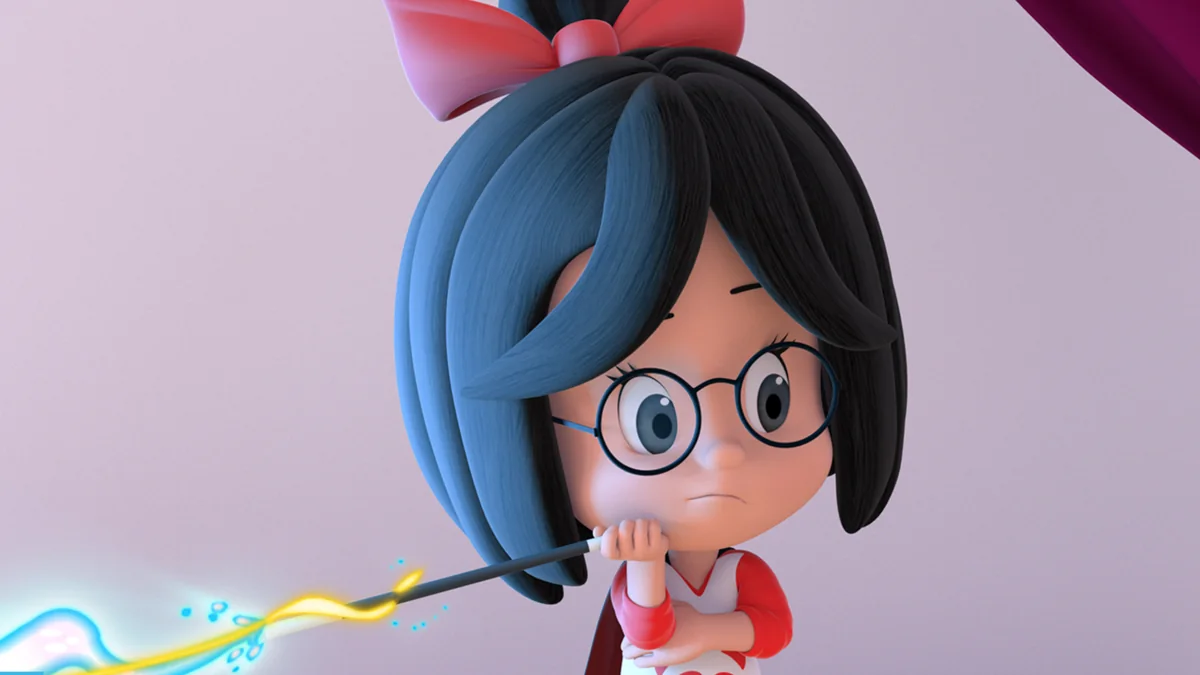
From age 3, children enter the preoperational stage, where symbolic play ("playing pretend") becomes the main driver of their intellectual development. When Cleo takes on the role of a doctor, a mechanic, a gardener or a ship's captain to solve a problem caused by Cuquin's mischief, she isn't just having fun: she's building mental models of the adult world.
2. From frustration to "I've got an idea!"
In every episode of Cleo & Cuquin, conflicts come from simple everyday situations (a broken toy, a rainy day that ruins an outing, a plant that won't grow). The story follows a thinking pattern that is key for children:
- Identifying the problem: What happened, and how does it affect us?
- Accepting it without drama: The initial frustration gives way to curiosity.
- Brainstorming, kid-style: Cleo exclaims "I've got an idea!", showing that there's more than one possible solution to any obstacle.
- Trial and error, together: The siblings work together, using tools and costumes to try out solutions.
3. Open-ended questions for parents to ask after watching the series
To build on the learning at home, invite your children to reflect after an episode with questions like:
- "What problem did Cleo have today, and what tools did she use to solve it?"
- "If your toy broke like that, what other job or invention could you think of?"
- "How did Cleo's brothers and sisters help fix Cuquin's mess?"
Let's play
Matching each job with its tools and the problems it solves, and looking for solutions.
The Jobs Dress-Up TrunkMore guides

Early stimulation from ages 1 to 3
Yes. Cuquin content is designed specifically for ages 1 to 3, with a focus on…

From tantrum to learning
Cleo & Cuquin promotes emotional self-regulation by turning mistakes and frustration into…
Pressure-free eating
Cuquin promotes independence and hygiene at the table, easing food neophobia through rhythmic play, color…